


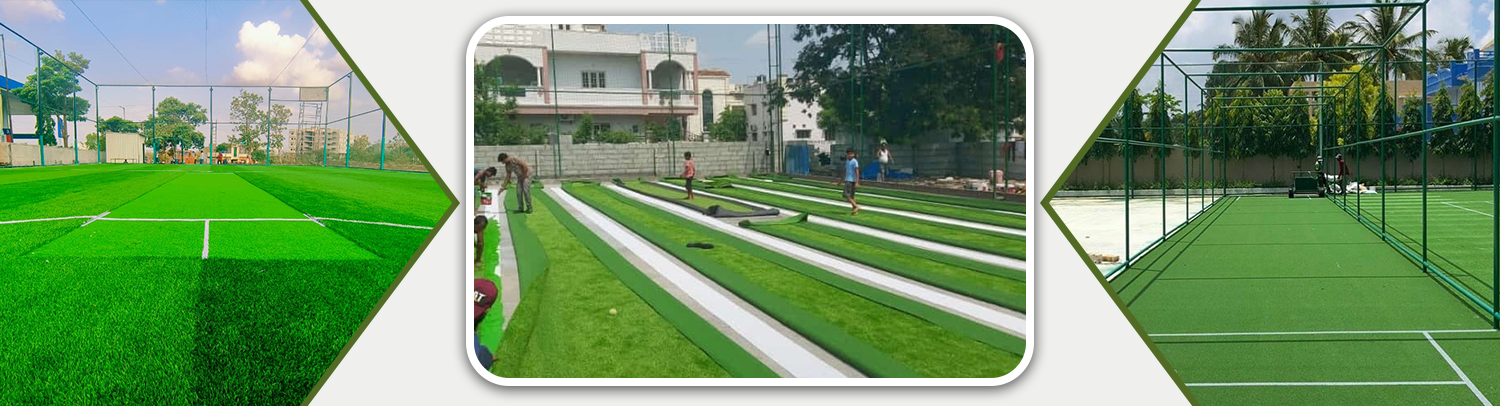
Box cricket is one of the most loved sports in the cities of India. Its small size, quick-paced nature, and exhilarating games make it a great choice for clubs, schools, or housing society. In contrast to conventional cricket, this is able to be played into smaller spaces, making it ideal for areas in which space is scarce.
Design and planning are essential to create secure, long-lasting and well-constructed facilities. The latest developments of box cricket construction have changed the way that sports facilities are designed and constructed in cities of India.
Box cricket started as an informal and small-scale variant of cricket played in small spaces or in streets. Players would make up boundaries as well as wickets and playing spaces.
At first, safety and durability weren't a top priority because the purpose was simply to have fun playing the game. In time, people began to realize the importance of well-designed design materials, safety, and expert construction.
Clubs and schools began building small stadiums, which provided children a safe environment in which to play. Housing societies also recognized the possibility of creating communities where people could play safely. The first construction usually was based on nets, floors made of hard, and temporary boundary lines.
Although they were functional, these structures faced issues with durability as well as safety and maintenance. The shortcomings of these earlier structures demonstrated the need for professional grade box cricket construction solutions.
Urbanization at a rapid pace in India has profoundly impacted the infrastructure for sports. Space is scarce and the traditional cricket fields are usually too big or costly to keep up. The markets for urban sports started looking for smaller, less efficient ways to promote sports participation. Box cricket was the perfect choice.
The demand for cricket increased in clubs, schools and residential complexes due to the fact that it needed less space and had fewer players but still offered an exciting and fun experience.
The compact nature of the game made it possible for planners to incorporate soccer into the urban landscape, without compromising other amenities such as parks or playgrounds. This has led to the rise of arenas specifically designed for use with artificial turf, robust nets and boundary walls that were specifically designed to ensure safety and durability.
Modern box cricket venues are the result of improvements in construction and design. The initial setups are simple, and susceptible to wear and tear. Nowadays, synthetic turf, interlocking tiles for sports are widely utilized to offer stability, constant bounce, and maintenance-free.
Modern designs also feature areas for resting, seating, as well as clearly-marked zones for players that were not present in earlier configurations. The combination of sophisticated design and the latest technology has made the box cricket arenas more secure and appealing for players of all ages.
As box cricket increased in popularity, it became more standard. The first informal games had different dimensions and rules that affected the level of play. Urban arenas are now governed by the same size guidelines, typically between 60 and 70 feet and 30 to 35 feet wide.
The standardization of boundaries, creases and wickets are designed to ensure fair playing and allow it to be easier to organize tournaments or training sessions. Schools and clubs gain from this strategy, as it lets them conduct official matches, without any conflicts.
Standardized construction also helps to reduce problems with long-term maintenance, since surfaces and materials are able to be upgraded, or replaced more effectively. Professional Cricket Turf Manufacturer services now implement these standards to build stable, safe and efficient arenas.
Technology has played an important contribution to the development of box cricket's construction. Modern surveying tools aid in the evaluation of a site, and ensure that the drainage is properly leveled and exposure to sunlight. The CAD (Computer-Aided Design) is frequently employed to design arrangements, enclosures, seating and lighting to maximize effectiveness.
Contemporary synthetic flooring is constructed with micro-layer technology, which provides constant bounce, cushioning and less impact on joints of players. The latest netting products are more robust and durable than the earlier alternatives.
LED lighting that has timings, controls and even timers have increased the efficiency of energy and has allowed games to continue into the evening hours. The advancement in technology has changed box cricket stadiums from basic street-side setups into top-of-the-line facilities that can meet modern urban demands.
Safety for players is an important factor in the construction. In the past, arenas had no safety measures, which led to numerous injuries. Modern arenas have padding walls, smooth flooring as well as strong nets and clearly marked exits and entrances.
Schools also enforce guidelines for supervision to safeguard young players. Housing societies and clubs also have the rules on their signage as well as emergency contact numbers. Safety features are included in the building process, so that everyone is able to enjoy the sport with confidence. Modern safety regulations have allowed urban box cricket to be accepted in residential complexes, schools and professional clubs.
In the beginning, box cricket was played outdoors, however urban restrictions have resulted in indoor arenas becoming more popular. Indoor arenas are able to play all weather and better control of lighting, ventilation, as well as the quality of the surface.
There are still outdoor arenas in larger areas and parks however indoor arenas provide more reliable conditions. Both require professional design and construction in order to ensure the proper flooring, enclosures and drainage. Schools and clubs typically choose indoor arenas to ensure accessibility throughout the year and housing societies might choose outdoor courts to make the most of sunlight and maximize space use.
Maintenance is essential, to ensure long-term performance. Early box cricket arenas were prone to wear and tear, which led to ruined nets, uneven floors and decreased security. Modern stadiums have well-organized maintenance programs that cover regular cleaning inspection of nets surfaces, maintenance of the surface, and lighting inspections.
Regular maintenance prolongs the life of synthetic turf, and guarantees consistency in ball behavior. Routine inspections can prevent injuries, cut down time and keep the look. Professional services typically offer maintenance advice or continuous assistance, making sure that the investment made in the arena is able to offer the value it deserves for many years to come.
The growth of box cricket has led to economic opportunities for India's market for urban sports. Equipment manufacturers, construction companies and suppliers of maintenance services, have profited from the increased demand. Schools and clubs can charge for coaching or even organize tournaments which can generate new revenue streams.
Housing societies benefit from the creation of areas for recreation, and socializing that increase community involvement. Their compact design allows arenas to be placed in urban areas, without taking up large spaces, making them an effective option for areas with a high density of people. Professionally constructed and maintained, these arenas are profitable, safe and fun for the entire community.
Box cricket's future in India is a sign of further development. Multi-purpose stadiums that accommodate other sports, improved artificial surfaces, as well as smart lighting options are expected to become a standard. Technology could allow monitoring of player performance, automatic maintenance alerts, and a better the experience of spectators.
Green construction materials and sustainable methods are likely to gain recognition, helping to reduce the environmental impact of sports facilities in urban areas. Professional box cricket construction services will remain a vital part in ensuring these innovations are executed effectively while also being cost-effective and safe.
Box cricket has grown from informal street games to professional-designed urban arenas. New construction practices, the most advanced materials, and security requirements have turned the game into a fun, safe and accessible sport that is suitable for clubs, schools, housing societies, and other clubs.
Standardized dimensions, well-thought-out design, and regular maintenance allow players to have fun with the least risk and have enjoyment. The market for urban sports in India has taken to the compact size and the professional services such as OSMS Turf have been central to this shift creating quality and durable facilities that are up to date with modern demands.
What exactly is box cricket or why does it become so popular in cities of India?
Box cricket can be described as a small form played within enclosed stadiums. It is a popular sport because it takes less space and allows for fast-paced games.
How has the construction of box cricket developed in India?
It has grown from casual street-based setups to arenas equipped with artificial grass, nets for safety along with LED light.
What are the most common materials used in modern arenas?
Artificial turf, synthetic turf interlocking sports tiles, steel frames, and sturdy nets are the most commonly employed.
Are the box cricket fields suitable for beginners and children?
Yes, with the right enclosures, walls with padding surveillance, and clearly designated zones, they are secure for all ages.
Why should you hire professionals for construction services for box cricket courts?
Professionals are able to ensure the proper design security, durability, and long-term maintenance, which makes the arena more stable and enjoyable.
...