


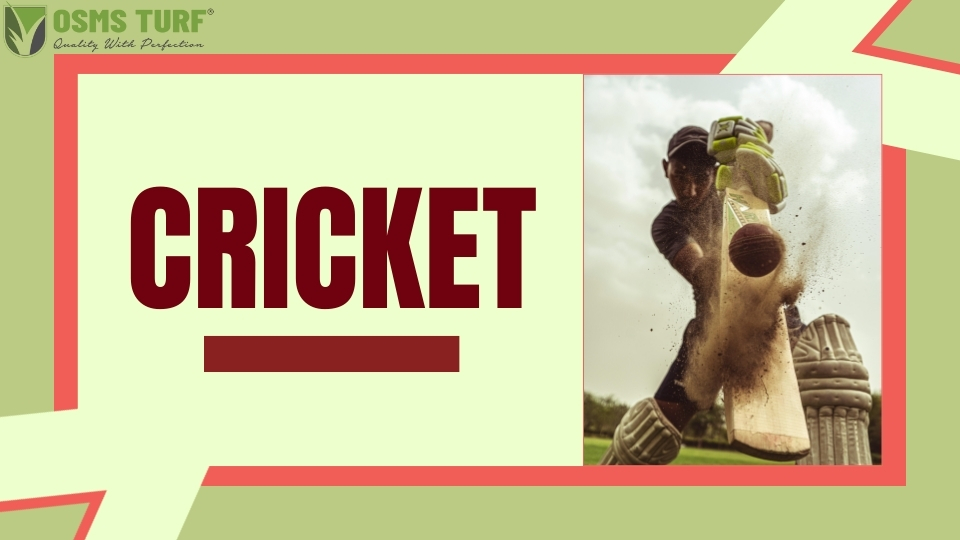
Artificial cricket pitches have become one of the top options for training pitches, academies and even smaller cricket fields. It's easy to maintain, remains steady throughout the seasons and offers players an even surface to practice at any time.
Behind every great turf lies a Cricket Turf Manufacturer who creates and constructs it using the correct materials. what cricket turf is made of, the process by which it's constructed, the features that matter and the reason OSMS Turf can be a reliable option for those looking to build a cricket field.
The term "cricket turf" refers to a surface constructed of strong fibers that appear and feel just like grass. The principal function of turf cricket is to provide a stable and predictable surface for players. If you're bowling quickly, spinning, or playing batting the surface is the same throughout the day. In contrast to natural grass, artificial turf does not require sunlight, watering or mowing. It can be used at any time.
The turfs of cricket are commonly used in academies, schools, sports clubs, gyms as well as in residential nets for practicing. They are especially beneficial when natural grass is difficult to maintain or where users need a long-lasting, easy practice area.
There are a myriad of reasons for why turf pitches are now popular:
A cricket turf manufacturer specializes in designing, producing, and installing high-quality playing surfaces tailored to the needs of modern cricket. Their work begins with assessing ground conditions, selecting suitable materials, and engineering durable base layers for stability and drainage. They then craft synthetic or natural turf systems that ensure consistent ball bounce, player safety, and long-term performance.
1. Choosing the Right Fiber
The fibres (or yarn) are the most significant component of turf. Manufacturers pick polyethylene or other similar substances that are soft yet robust.
2. Stitching the Fibers (Tufting)
The fibers are woven into an underlying cloth with the help of machines. This results in the green finish that you observe.
3. Adding Backing Layers
To make the turf more firm and durable, producers attach backing layers that keep the fibers.
4. Testing for Cricket Use
Before the turf is sent to be installed, it goes through quality tests:
Testing bounce
This makes sure that the pitch is suitable and safe for cricket.
Different turfs are not exactly the same. When choosing a cricket pitch Here are the most important factors that are most important:
Different locations require different kinds of cricket pitch. Here are some common choices:
Both artificial and natural turfs have their own uses However, artificial turf is clearly superior for training facilities:
Natural grass gets waterlogged after rain or it becomes dry and patchy during summer. Turf remains stable through all seasons.
You don't have to be:
This will save you time, effort and also money.
Turf is able to be utilized for a long time without concern about the surface getting worn out. Natural pitches require some time to rest and recover.
Beginning students benefit from a constant bounce. This allows them to learn the basics quicker.
This is one of the most reputable names in cricket turf production. Their approach is simple, sturdy and long-lasting turf products that are suitable for various kinds of cricket pitches.
The turf of cricket is ideal for a variety of locations. These are some of the more frequent types of users:
It provides simple, robust, and simple-to-maintain systems that are easy to maintain and durable. They know the requirements of coaches, players and academies. Their turf provides a consistent bounce, good grip and a long-lasting life. If you're looking for an area for practice or a whole surface, as well as an indoor or outdoor cricket field, OSMS offers options that will fit in with your space and budget.
The team can also help you plan the layout, set up the turf in a proper manner and help you understand how to maintain the turf in good shape. They are a solid option for anyone looking for an uncluttered and reliable cricket pitch.
Choosing the right cricket turf manufacturer is important because the pitch directly affects player performance. A well-made turf gives stable bounce, stays strong for years, and is easy to maintain. Artificial turf is a smart choice for schools, academies, clubs, and even personal training.
OSMS Turf provides high-quality cricket turfs that are easy, reliable, and safe for use every day. If you install it correctly and provide basic maintenance the turf will be maintained in top condition for an extended period of time and aid in helping players improve their training.
Can cricket turf be used for both spin and fast bowling?
Yes. A good cricket turf works well for both. Fast bowlers get a steady bounce, and spinners get enough grip to turn the ball.
Does the turf heat up in summer?
Artificial turf can warm up in strong sunlight, but high-quality turf stays cooler because of UV-resistant fibers.
How do I know if the pitch needs brushing?
If the surface starts looking flat or the bounce feels slightly low, brushing helps lift the fibers again.
Can we use cricket shoes with spikes on artificial turf?
It’s better to avoid metal spikes because they can damage the turf. Rubber studs or flat shoes are ideal.
How long does installation usually take?
Most practice pitches take 1–3 days depending on the ground preparation needed.
...