


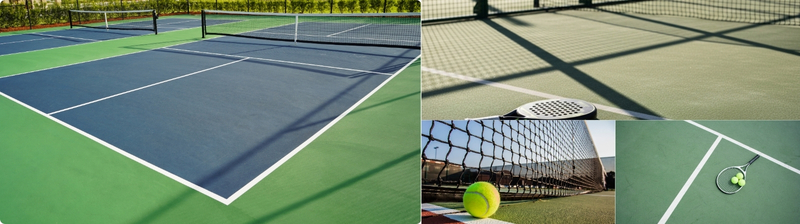
Tennis and school clubs are always searching for tennis courts that can be safe, secure, and simple to maintain. Modern tennis facilities increasingly opt for artificial turf over natural courts due to its steady performance and requires less maintenance. The players enjoy the smooth, level surface that facilitates greater ball control and movement and clubs save time and money by avoiding maintenance.
While it's regarded as low maintenance, Artificial tennis turf needs to be maintained to function at its peak. Regular maintenance will ensure that the surface is safe, long-lasting and suitable for casual and professional players. With a well-planned routine clubs can prolong turf durability, lower the cost of repairs, and provide more enjoyable play for players.
Regular cleaning maintenance, brushing, management of infill and inspections are vital. A clean and well-maintained court not just appears professional, but it also increases safety and lowers the risk of injury. Artificial grass is also able to aid in the preservation of the environment by reducing water usage, and also removing the need for pesticides and chemical fertilizers.
Artificial tennis turf is longer-lasting and performs consistently when it is maintained. If not regularly maintained dirt, dust and worn fibers may alter the bounce of a ball, decrease the amount of traction, and also affect player safety. Prevention of maintenance helps clubs avoid costly repair or replacement that is not needed.
Clubs and academies that prioritise care benefit from reliable playing conditions and improved training quality year after year.
Performing daily maintenance can prevent minor issues from escalating into larger problems. Even small particles can harm fibers over time if unattended.
Every day, the maintenance team ensures that the playing surface is clean, safe and free of obstructions. It also improves the confidence of players and general satisfaction.
Maintenance schedules for this season ensures that synthetic turf can perform consistently in changing the weather.
To support long-term durability, safety, and performance, the following checks and tasks should be carried out regularly:
Infill is a key aspect to the stability and strength of the turf as well in cushioning and the behaviour of a ball.
A properly-managed infill system will ensure an unbeatable bounce for the ball which reduces fatigue and injuries to players.
It is essential to keep your space clean, especially common spaces like schools and clubs, where pollen, sweat and dirt accumulate.
Safety of the player is a top concern for any sporting facility. Regular inspections can prevent injuries and ensure a consistent performance.
A focus on safety builds confidence in the player and helps ensure that training continues uninterrupted and competitive play.
Artificial tennis turf is an eco-friendly alternative to natural grass courts.
These benefits aid clubs in reducing costs and promote sustainable practices.
The areas around nets, baselines and entry points see more wear, and need special attention.
Attention to these areas ensures that the court stays at a safe level and long-lasting.
Changes in seasons require special attention to keep performance up-to-date all year long.
The preparation for the season helps to keep appearance, safety and playability throughout the year.
Selecting a trusted artificial tennis surface or provider like OSMS Turf guarantees longevity and long-term help.
A trusted service provider guarantees that your turf investment will yield consistent outcomes throughout its life.
How long will artificial tennis courts last?
Top-quality Artificial tennis turf will last for 10-15 years if it is maintained with regular maintenance. This includes regular cleaning, brushing and management of infill.
Does artificial turf become damaged quickly?
The turf is tough however, the lack of care, sharp objects or even improper cleaning could cause injury. Regular maintenance can prevent most problems.
Is the artificial turf secure to all tennis players?
Yes. It's made to absorb shock, have a non-slip surface and even construction that ensures the safety of players.
When should grass be cleaned?
The brushing process should be conducted each week or daily depending on the usage, to ensure that fibers stay up and level, as well as maintain an even distribution.
Does artificial turf require watering?
It requires only a little water to keep dust at bay or to cool off the grass during summer heat, making it more sustainable than grass that is natural.