


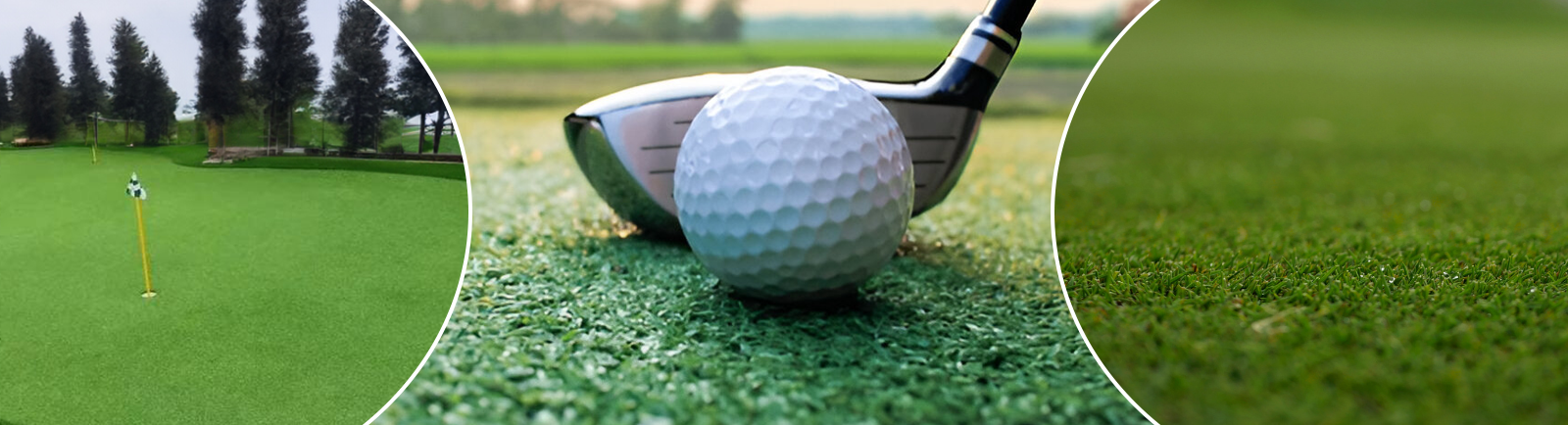
The artificial golf turf has transformed how the modern golf courses, driving ranges, and putting greens are constructed and maintained. Its consistent performance, less water consumption and longevity have made artificial golf turf a favourable substitute of real grass in most areas.
However, like any man-made surface, artificial turf may experience performance challenges -particularly drainage-related ones - when considered improperly installed, built on an unsuitable base, or poorly maintained. Such problems are found to be misinterpreted and misdirected at the turf itself, but in most cases , the root cause can be found at the bottom.
It covers common drainage and performance challenges associated with artificial golf turf, their root causes, practical fixes, and preventive measures that support long-term surface reliability.
Drainage is an essential factor in the performance, appearance and longevity of artificial golf turf. An efficient drainage system is the one whereby the rain water, irrigation runoff, and moisture present on the surfaces are directed at a very intense pace to drain the turf.
These problems may be water puddling, sinkholes, unevenness, and foul odours with no drainage, which are the best turf system issues. This has direct effects on the playability, safety and the cost of maintenance.
Drainage is not an option, it is the basis of an effective golf turf installation.
Drainage issues usually reveal themselves gradually. Identifying signs of trouble early prevents expensive unemployment of time and money.
When the puddles are left covering the turf surface within hours of rain then it means that there is limited flow of water through the base or backing.
The turf of golf must be hard and solid. Poor compaction or sub-base settlement is usually indicated by soft patches.
Failure of drainage in putting greens may result in slight low spots that influence the speed and accuracy of balls.
Water that gets stuck under the surface may give rise to bacteria development and offensive odors, especially in dark or heavily trafficked areas.
Consistently damp turf surfaces create ideal conditions for algae, which reduces traction and aesthetics.
Most drainage problems stem from installation-related factors, not turf quality. Below are the common reasons why artificial golf turf may experience drainage issues:
Sand-only or soil-based foundations inhibit the flow of water. Golf turf systems need free draining aggregates which do not lose stability with loading.
The fact that a shallow base lacks capacity to distribute water especially during heavy rain falls.
With a loose or uneven compaction, there are openings filled with water rather than water draining.
Pores in weed membranes/ shock pads are blocked by dust, soil or organic matter and make them less permeable.
Installation of golf turf should have a minor slope that directs water to drainage points.
Unless maintained, infill and base layers can be flattened as a result of foot traffic and equipment movement.
Not every drainage is in need of total reconstruction. The correct solution is relative to severity.
Only under the condition that the base is structurally sound:
To be used where the problems do not go away:
Brushing keeps turf fibres upright and prevents infill from compacting. This maintains consistent ball roll and allows water to pass through the surface efficiently.
Light rinsing removes dust, debris, and fine particles that can block drainage pathways and slow water movement through the turf system.
Checking seams and edges is used to detect lifting or gaps before they occur and cause accumulation of debris as well as unequal drainage on the playing field
In the long run, slight movements of the ground may influence the slope and flow of water. Water monitoring levels make sure that water remains directed to specific outlets.
By ensuring that the perimeter edges and drainage exits are not blocked, the pooling of surfaces is avoided even during a downpour.
Not all artificial turf is suitable for golf. Putting greens, driving ranges, and practice areas require specialised systems designed for controlled ball roll, resilience, and drainage.As a golf turf manufacturer, OSMS TURF develops turf products with:
Using the wrong turf type can lead to premature wear and drainage failure, even with good installation.
Artificial golf turf does not always have drainage issues. They virtually all are caused by shortcuts in installation, improper base preparation or lack of continued maintenance.
Through the knowledge of drainage systems, the appropriate materials, type of turf and construction skills, golf facilities would be able to experience the year-round players, the best appearance and sustainability.
Does artificial golf turf drain better than natural grass?
When installed correctly, artificial golf turf offers faster and more predictable drainage than natural grass.
Can artificial golf turf handle heavy rain?
Yes. A properly designed base and drainage system allows water to pass through efficiently, even during heavy rainfall.
Why does my artificial turf smell after rain?
This usually indicates trapped moisture, organic buildup, or blocked drainage layers beneath the turf.
How long does artificial golf turf last?
High-quality systems typically last between 8 and 15 years, depending on usage and maintenance.
Is drainage maintenance required for artificial turf?
Minimal maintenance is needed, but regular inspection and cleaning help prevent long-term issues.
...